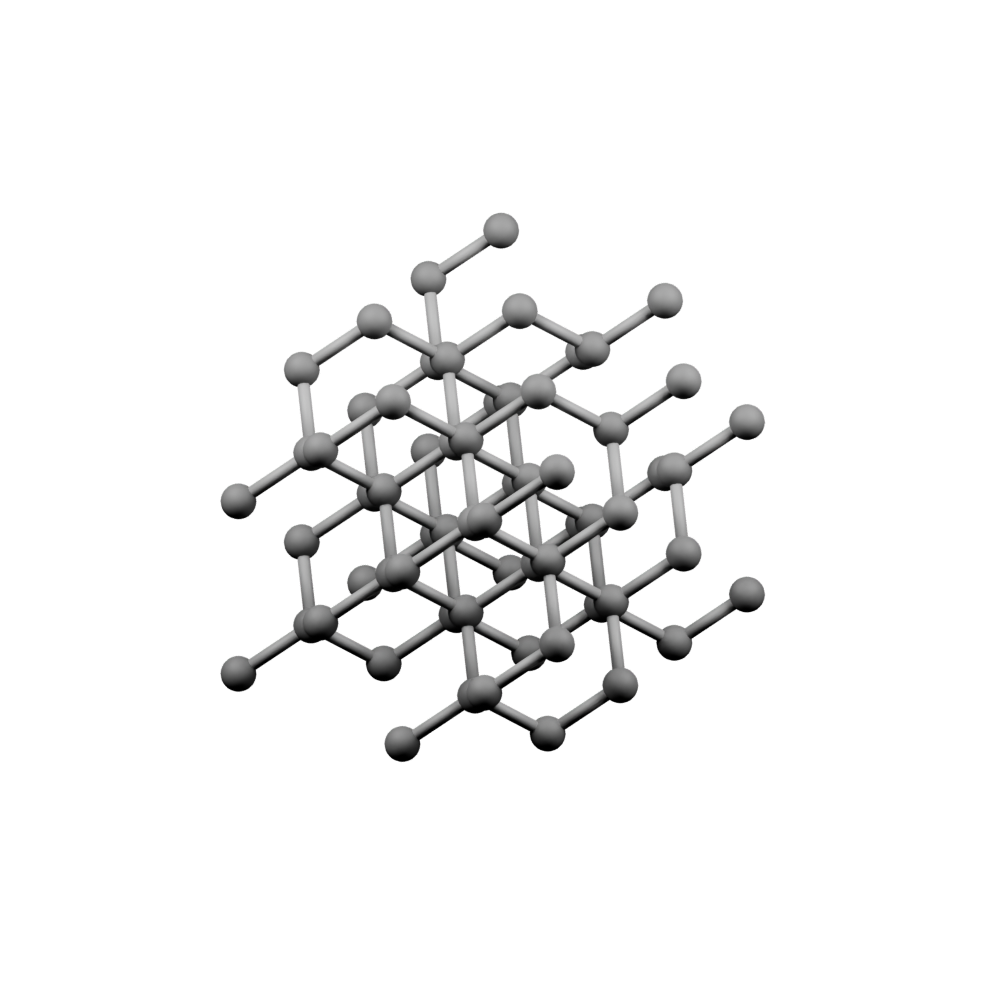
Semiconductors
Film qualityResidual gasDepositionEtchingDefect formation
High temp, high pressure, limited in-situ visibility, defects can form before you see them.
A lab-on-the-line approach to manufacturing.Connecting molecular behavior, process conditions, and product quality.
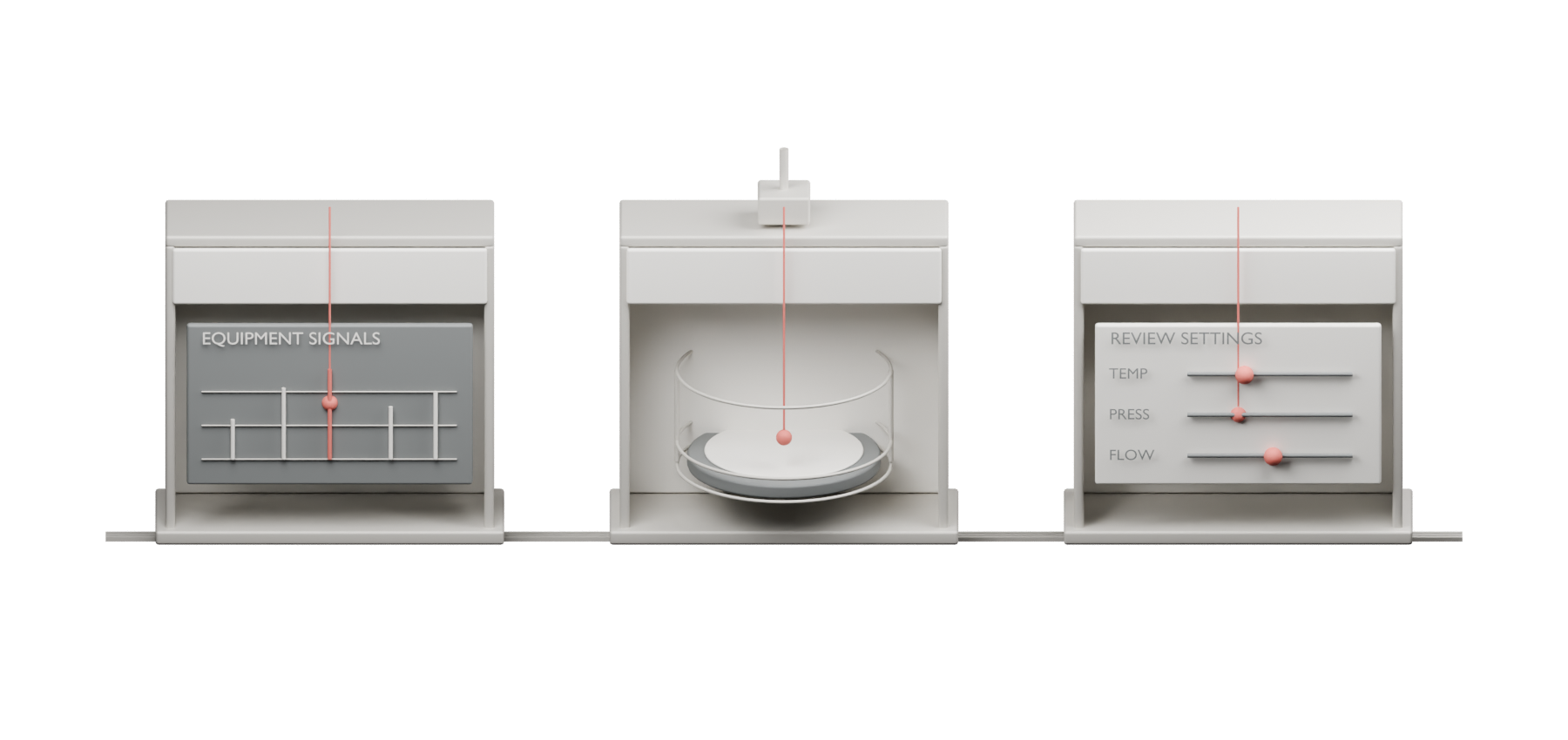
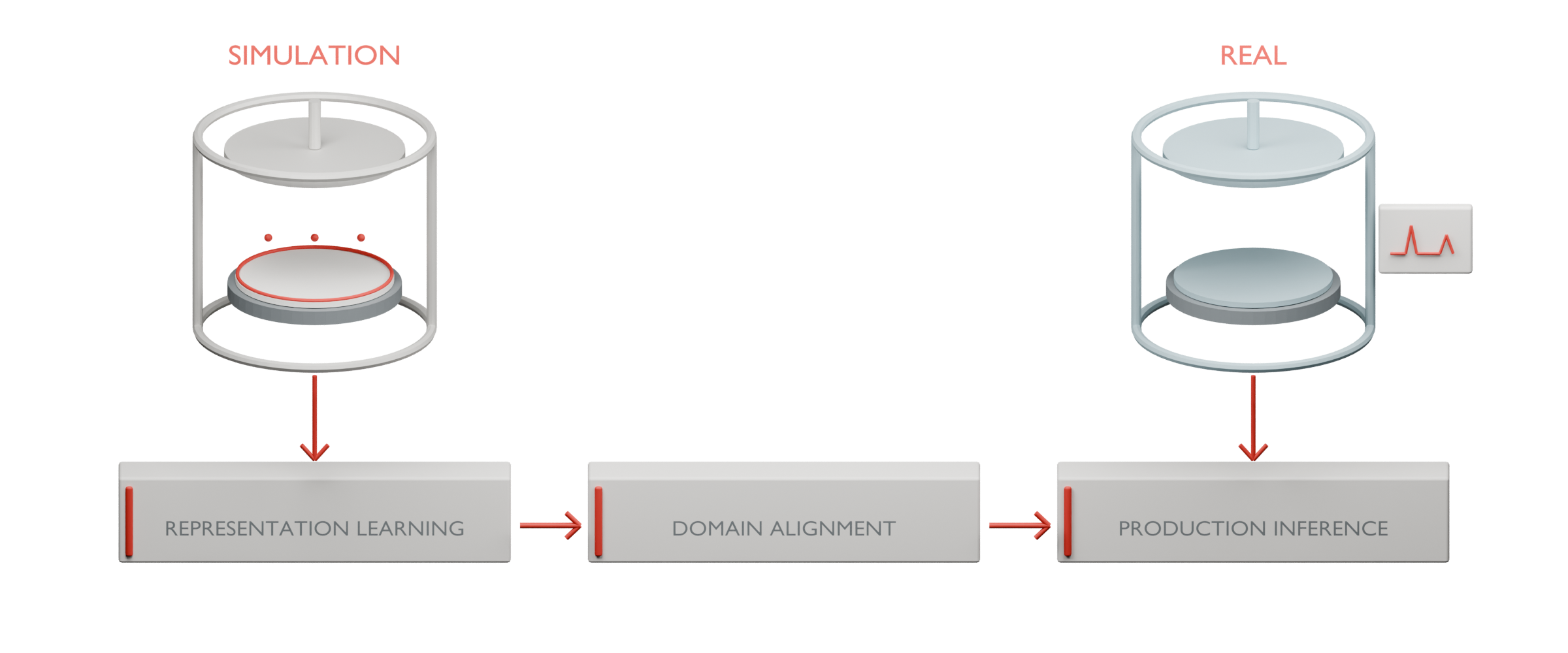
Simulated material states are connected to secondary process signatures that production tools can measure. Representation learning captures how those states relate to process signatures in a simulated environment. Domain alignment then adapts that relationship to signals measured on the production line. Quality-aware alignment preserves links relevant to product quality while accounting for differences between simulation and production. Available quality measurements calibrate and test the model for a specific process. Once validated, production inference uses incoming signals to update an estimate of the relevant quality outcome as the process runs. The resulting indicator can flag emerging risk for review.
 (F)luoropolymer
 C
CUnderstand the material, production challenge, data, and desired outcome.
Build and evaluate a customer-specific molecular simulation framework.
Compare model output with observations and define useful process indicators.
Integrate validated intelligence into the production workflow.
Monitor quality stability, process drift, and risk as conditions evolve.
Prefer email? yuhaoji@ncre.io ↗